


Drawing with Scissors
Henri Matisse is widely celebrated as a master of color. While his entire body of work is stunning, I find myself most deeply captivated by his “cut-outs” from his later years.
Even after falling ill and losing much of his mobility, Matisse never lost his creative spark. He continued to create from his wheelchair, and sometimes even from his bed, by painted sheets of paper with scissors. I am drawn to these works not only for their beautiful, free-flowing forms and vibrant colors but perhaps because I feel the lifelong passion he poured into his art vibrating through them.
When my daughter was five, we attempted to recreate his work, La Gerbe. To know, to observe, and to create—by physically moving our hands, we gained insights that observation alone could never provide. It was as if we were tracing the passion overflowing from his work, drawing with scissors.
We finished the project loving his work even more than before. This was about six years ago now; looking back, seeing my daughter’s hands in the photos —forever five years old— is incredibly dear to me.

Materials
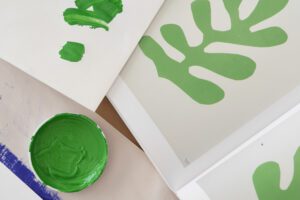
– Acrylic paints
– Heavyweight paper such as drawing paper
– Scissors
References
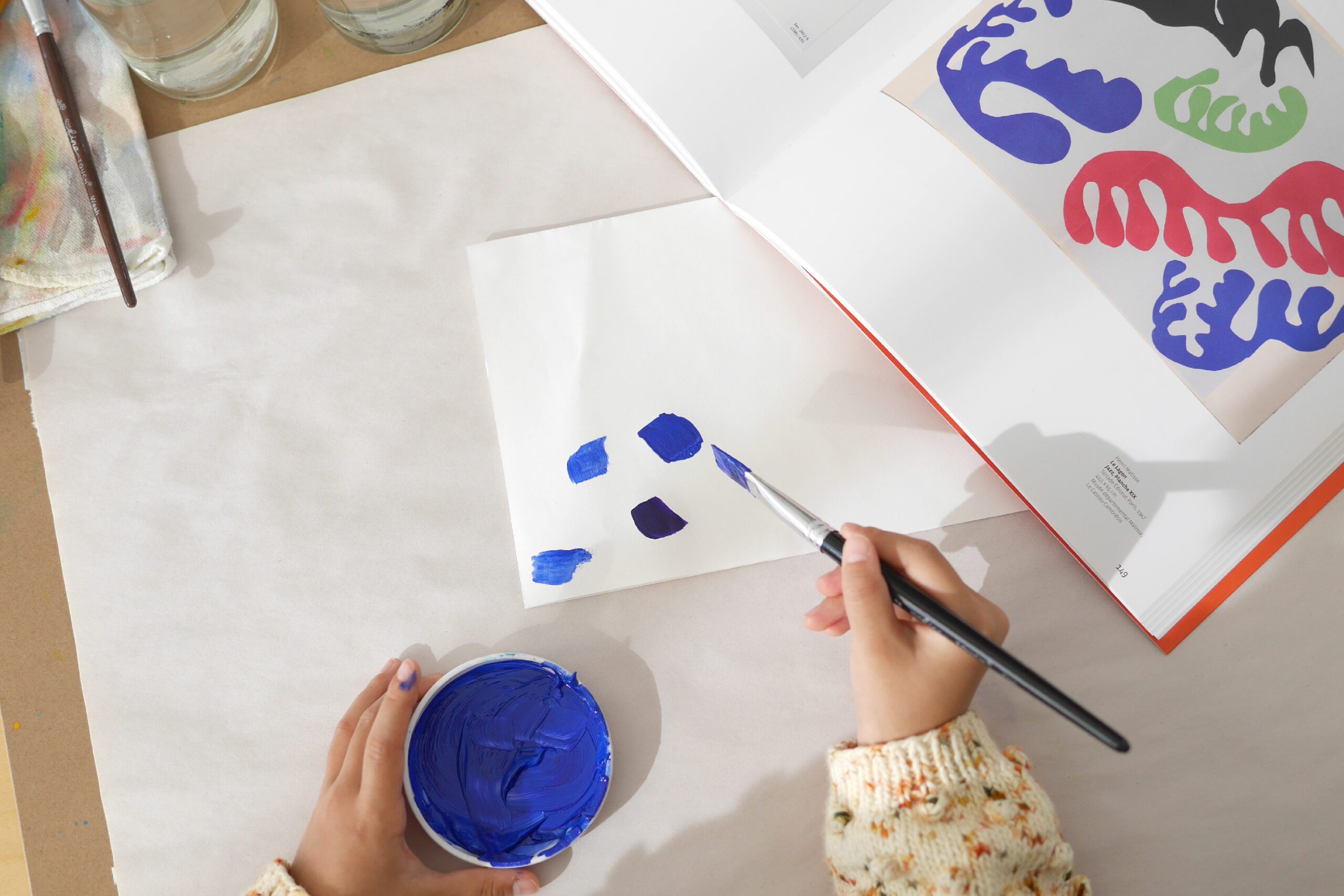
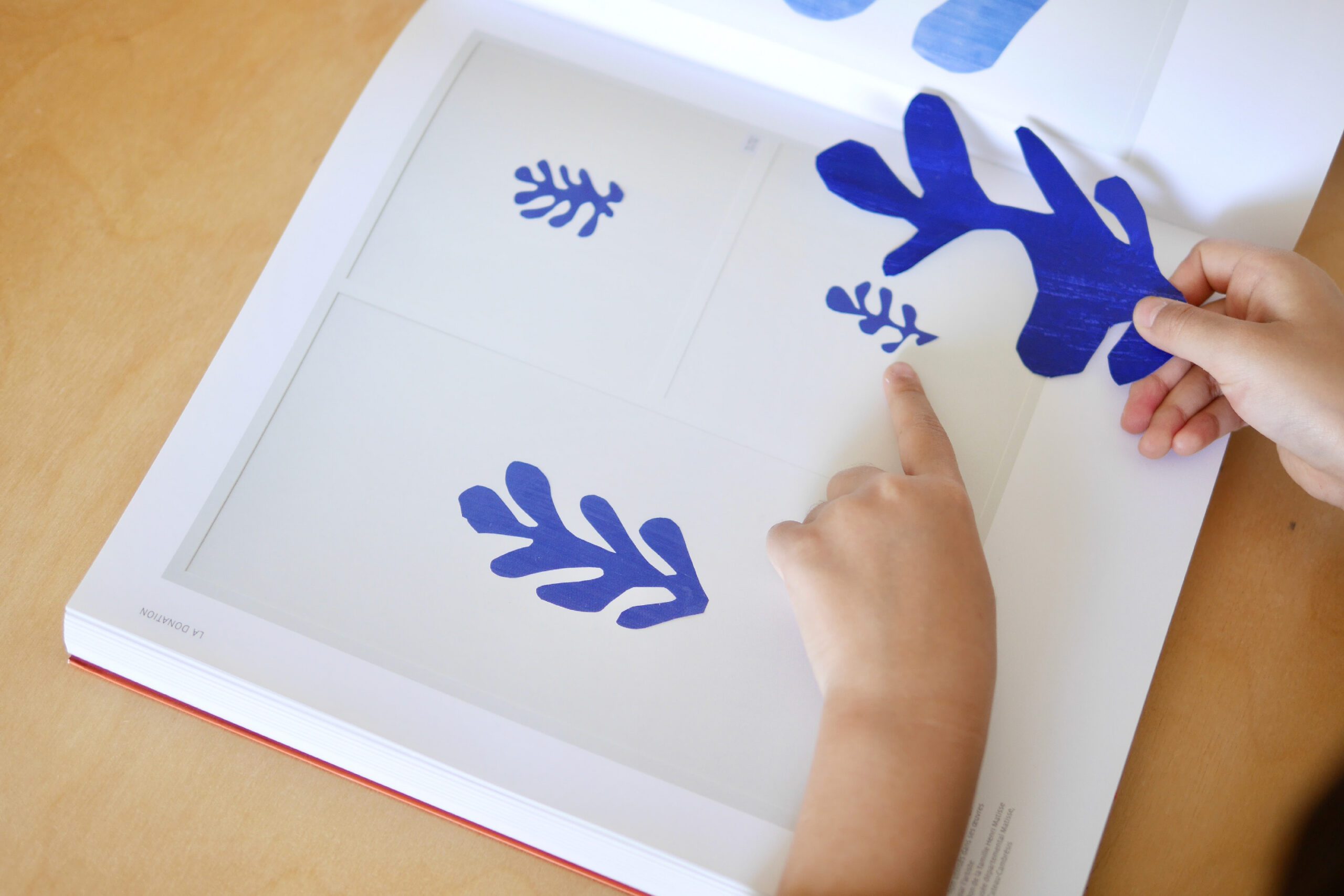
From Matisse’s late cut-outs, we decided to create a piece based on La Gerbe, which features leaf and floral motifs. We referred to several books for inspiration and have included photos of them here. They range from art collections to children’s books, so I hope you find one that resonates with you.
Note: La Gerbe is part of the collection at the Los Angeles County Museum of Art (LACMA). You will be able to see this magnificent work again at the new David Geffen Galleries, which is set to open in Spring 2026.

Instructions for making
Step 1. Mixing the Paints
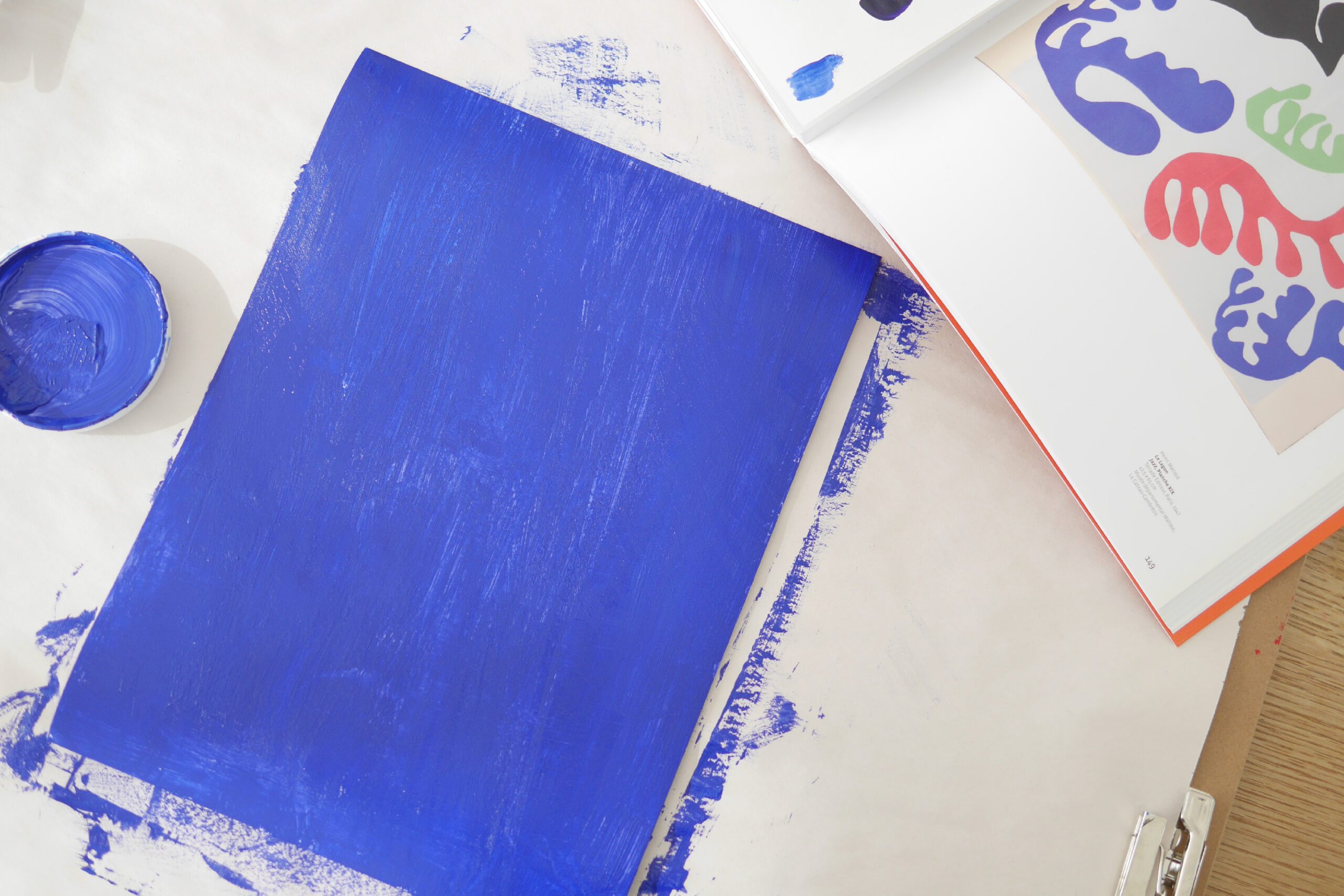
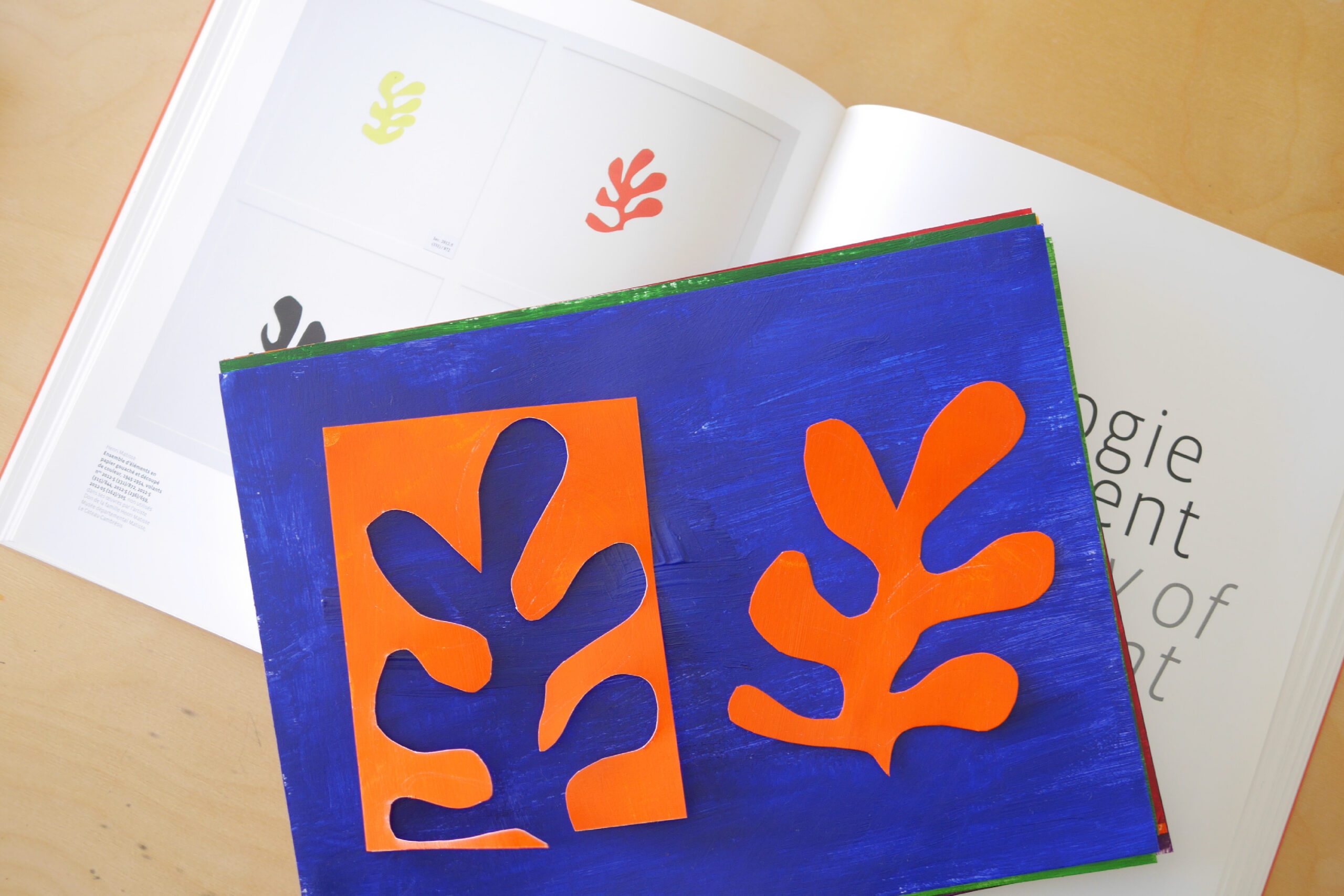
We began by mixing acrylic paints to discover the specific colors that define Matisse’s world—vibrant blue, orange, green, and black. Through repeated trial and error, we compared our samples with the art books until we found the perfect shades. Once the desired hues were achieved, our “Matisse Palette” was complete. We then applied the paint to heavyweight paper and let it dry.



Step 2. Tracing and Cutting Out
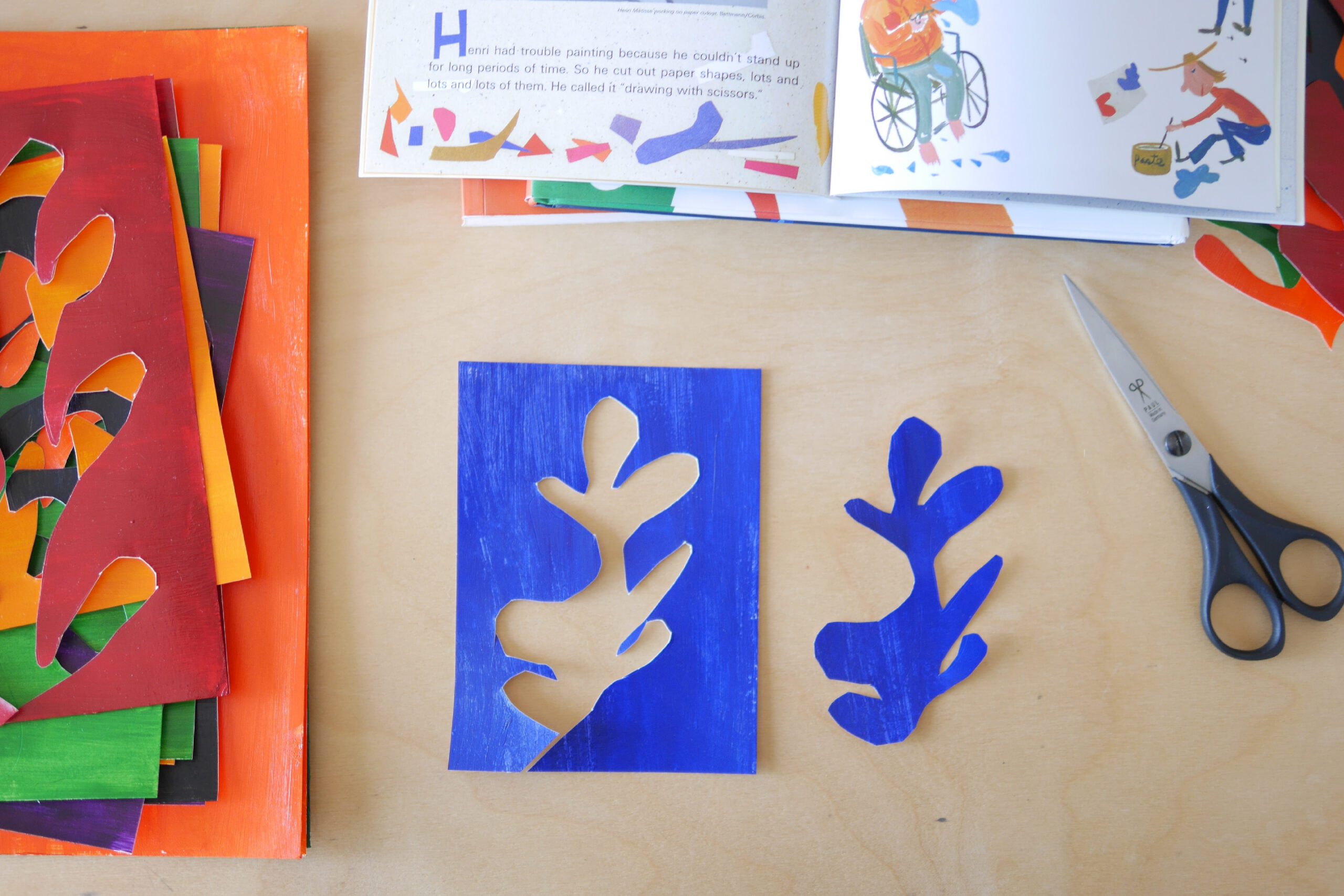
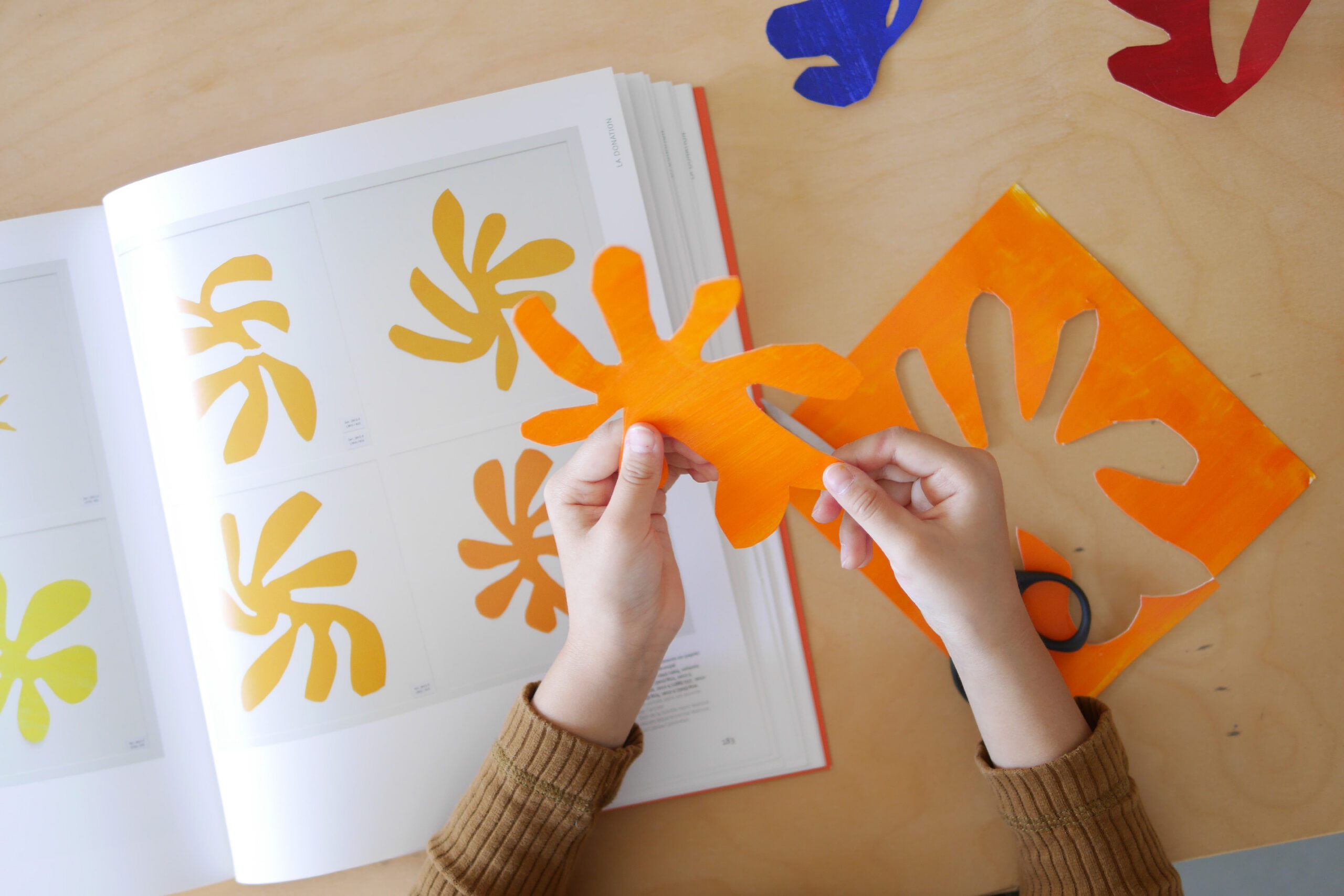
Next, we traced the outlines from the art book onto our painted paper. What kind of shape is it? Look closely and carefully. Then, we cut along the lines with scissors. It’s okay if the lines are a little shaky or if you don’t follow the trace perfectly. Holding the scissors in one hand and the paper in the other, cutting curves feels like a rhythmic dance. During this process, my daughter discovered that moving the paper —rather than just the scissors— made it much easier to cut the shapes she imagined.


Step 3. Completion
Following the first few pieces, we continued to cut out various shapes inspired by Matisse’s motifs. Even if they weren’t perfect replicas, these free, beautiful, and organic forms existed there as stunning objects in their own right—as if they were open to accepting everything. I took the liberty of interpreting this sense of inclusiveness as another part of Matisse’s profound charm.

At the End of the Creation...
I realized that the “negative space” —the paper left behind after the cut-out— had also become a beautiful form in its own right. Like yin (陰) and yang (陽), these two shapes exist in perfect contrast.
The cut-out objects can be placed in a frame to be displayed as original art. If you write a message on the back, they become wonderful handmade cards. They might even function perfectly as unique, oversized bookmarks.

Drawing with Scissors
フランスの画家として知られるアンリ・マティス。美しい色彩の画家として有名な彼ですが、私はマティスの晩年の制作活動の中心であったカットアウトの作品に深く魅了されます。
病に倒れ、身体が思うように動かなくなったマティスはそれでもなお創作の意欲を失わず、着色した紙をハサミで切り抜くスタイルで創作を続けました。車椅子に座りながら、ときにはベッドの上でも。この作品に私が惹かれるのは、その美しい自由なフォルムや色彩だけでなく、マティスが生涯にわたって創作に注いだ情熱をこの作品から感じるからなのかもしれません。
娘が5歳のときにLa Gerbeの複製に挑戦しました。知ること、観察すること、そしてつくってみること。実際に手を動かすことで、見ているだけとは違う気づきを感じます。作品から溢れるマティスの情熱をなぞるように。ハサミを使ってドローイングをするように。
この制作を終えて私たちはますます彼のことを好きになったのです。これはいまから6年ほど前の制作ですが、写真の中の娘の手が5歳のままで止まっていて、それもまた愛おしいのです。
用意するもの
– アクリル絵の具
– 画用紙など厚手の紙
– ハサミ
参考にした書籍
私たちはマティスの晩年のカットアウトの作品の中から、La Gerbeという葉や花をモチーフとした作品をつくることにしました。そしていくつかの本を参考文献として使用したのでここに写真に残します。画集や子ども向けの本などさまざまなものがありますので、あなたに合った一冊の参考になりますように。
*La GerbeはLos Angeles County Museum of Art (LACMA)に収蔵されています。2026年春に新しくオープンする David Geffen Galleriesで再びその素晴らしい作品を見ることができます。
つくりかた
Step 1. 絵の具を調合する
まずはじめにアクリル絵の具を調合してマティスを構成する色を探るところから始めました。青、オレンジ、緑、黒。試し塗りを繰り返し、画集の色と見比べて納得のいく色を探しました。そして希望の色ができたらマティスカラーの完成です。画用紙に色を塗り乾燥させます。
Step 2. トレースとカットアウト
着彩した紙に、画集を参考に下絵を写します。どんな形をしているかな? 慎重によく見て。写した線に沿ってハサミで切り抜きます。少しくらい歪んでも、線の通りに切り抜けなくても大丈夫。片手にハサミ、もう一方の手に紙を持ち、曲線を切り抜くのはある種のリズムを感じます。娘はこの時にハサミではなく、紙を動かすと思う形に切りやすいことに気がつきました。
Step 3. できあがり
その後もマティスのモチーフを参考にさまざまな形を切り抜きました。全く同じにならなくても、この自由で美しい有機的な形はすべてのものを受け入れるように、美しいオブジェクトとしてそこに存在しました。この包容力もまたマティスの魅力なのかもしれないと勝手に解釈したのでした。
制作の終わりに…
カットアウトをしたその反対側の部分、切り抜いた反対側もまた美しい造形となっていることに気づきました。まるで陰と陽のように、対照的に存在する二つの形。
切り抜いたオブジェクトはそのままフレームに収めたらオリジナルのアートとして飾ることができるでしょう。裏にメッセージを書けば手作りの素敵なカードに。あるいは大きなブックマークとしても完璧に機能するかもしれません。